
Dubai has one of the most competitive dental markets in the world. On any given day, a resident scrolling through Instagram or Google will encounter dozens of advertisements promising dental implants at dramatically low prices — sometimes as little as AED 999 or AED 1,500 per implant. The offers are polished, the before-and-after photos are …

Dubai has one of the most competitive dental markets in the world. On any given day, a resident scrolling through Instagram or Google will encounter dozens of advertisements promising dental implants at dramatically low prices — sometimes as little as AED 999 or AED 1,500 per implant. The offers are polished, the before-and-after photos are striking, and the promises are compelling: same day implant, painless procedure, smile today. For a patient who has been putting off replacing a missing tooth, these ads can feel like the answer they’ve been waiting for. In most cases, however, they are the beginning of a much longer — and far more expensive — story. Understanding the full picture of dental implant quality, pricing, and clinical standards in Dubai is not just useful knowledge. For many patients, it is the difference between a result that lasts a lifetime and one that fails within years.
What a Dental Implant Actually Costs — And What Gets Left Out
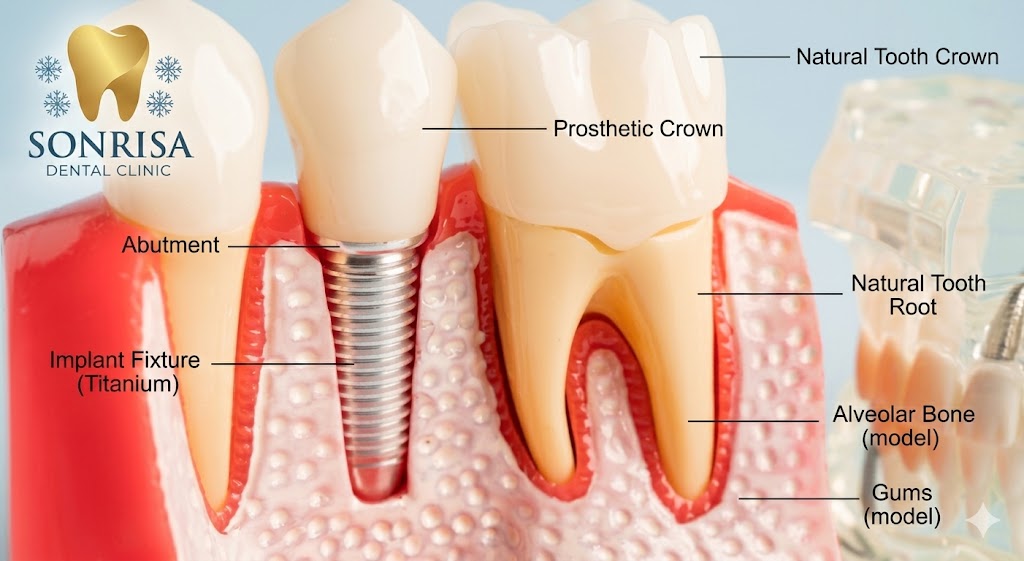
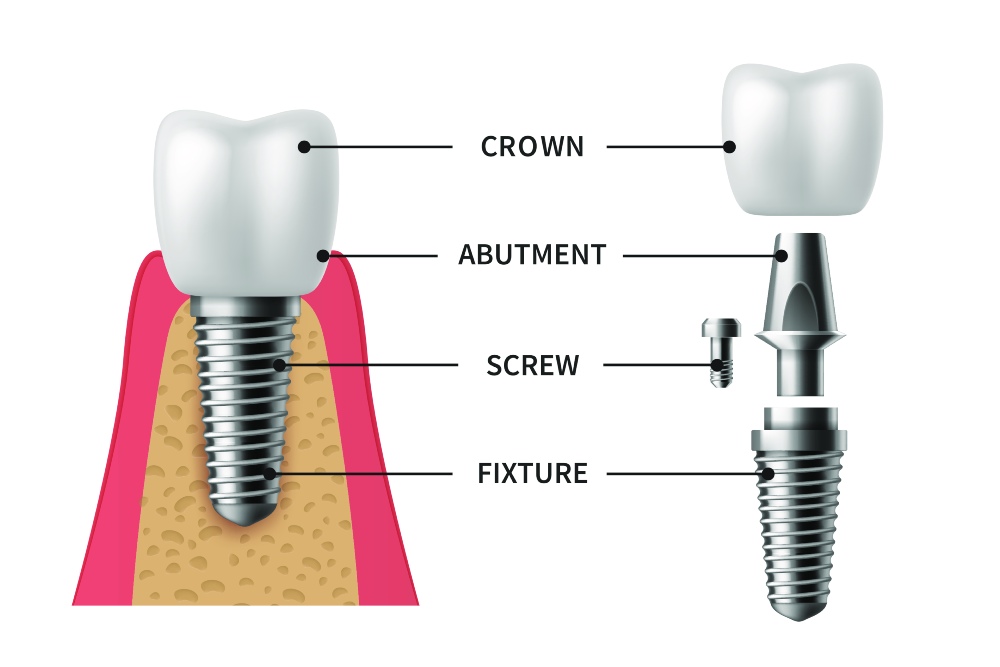
The single most important thing a patient in Dubai needs to understand about implant advertising is this: the price shown almost never represents the full cost of treatment. A dental implant is not one item. It is a three-part system: the titanium implant fixture that integrates into the jawbone, the abutment that connects it to the restoration, and the tooth crown that sits on top and does the actual work of chewing and aesthetics. When a clinic advertises an implant at a cheap price — say AED 1,200 or AED 1,500 — they are almost always quoting the cost of the fixture alone. The abutment and the tooth crown prices are listed separately, or disclosed only during the consultation when the patient is already emotionally committed to proceeding.
In a comprehensive, honest treatment quote, a single implant in Dubai — including the implant fixture, abutment, crown, and all associated clinical appointments — typically ranges from AED 5,000 to AED 12,000, depending on the brand of implant used, the complexity of the case, and the qualifications of the treating specialist. When you see something advertised far below this range, the question is not whether you are getting a deal. The question is what, exactly, has been removed from the equation to reach that number.
The Implant Brand Question: Not All Fixtures Are Created Equal
One of the most significant and least discussed variables in implant dentistry is the origin and quality of the implant fixture itself. The global implant market is stratified into three broad tiers, and the differences between them have real consequences for patients*.
Tier 1 — Swiss and German systems (Nobel Biocare, Straumann, Dentsply Sirona): These are the gold standards of implant dentistry. Backed by decades of peer-reviewed clinical research, they carry documented long-term success rates consistently above 95% over 10 years. They are designed with precise engineering tolerances, biocompatible surfaces that promote osseointegration, and global support networks that mean any qualified specialist anywhere in the world can work with them. Their cost in Dubai reflects this: AED 3,000 to AED 5,000 for the fixture alone.
Tier 2 — South Korean and reputable regional systems (SGS, Osstem, Megagen, Dentium): Solid, well-researched implants with growing bodies of clinical evidence. Significantly more affordable than Swiss or German systems while still maintaining respectable durability and success rates. Widely used in Dubai and appropriate for the majority of standard cases when placed by a trained specialist. Fixture cost: AED 1,500 to AED 3,000.
Tier 3 — Low-cost unbranded or lesser-known Chinese and Eastern European systems: These implants are not necessarily dangerous, but they carry meaningfully higher failure rates in clinical literature, less predictable osseointegration, and — critically — no global support infrastructure. If a component breaks or needs replacing years later, replacement parts may be unavailable. This tier is what underlies most of the cheap price advertising seen across Dubai’s digital landscape, and it is the category patients rarely know they are receiving until something goes wrong.
The honest value calculation here is straightforward: a high-quality implant placed once, correctly, by a trained specialist doctor, is almost always less expensive over a 10-year horizon than a cheap implant placed by lessor experienced general dentist, followed by the complications, revisions, and bone grafting that frequently result.
*Fixture allocation to 3 tier was based on the following factors: Place of origin, number of available studies in the market, long-term success rate, and price range.
The Specialist Question: Who Is Actually Placing Your Implant?
This is the conversation that Dubai’s implant advertising landscape most aggressively avoids. Dental implant placement is a surgical procedure. It involves incisions into gum tissue, drilling into jawbone, and precise three-dimensional positioning of a titanium fixture relative to nerves, sinuses, and adjacent tooth roots. The difference in outcome between an experienced oral maxillofacial specialist and a general dentist who has attended a weekend implant course is not a matter of opinion — it is documented extensively in clinical literature.
An oral maxillofacial specialist completes between four and six years of post-graduate surgical training beyond dental school. They are trained in bone grafting, sinus lift procedures, complex extractions, nerve management, and the full range of complications that can arise during and after implant surgery. They can manage the unexpected. A general dentist offering implants — particularly at cheap price points — has typically completed the minimum required training to offer the procedure, which in the UAE and many other markets is a short certification course. This is not a criticism of general dentists as a category; there are excellent general practitioners who place straightforward implants competently. But for patients with bone deficiency, post-extraction sites, proximity to the inferior alveolar nerve, or any complication history, the clinical risk of choosing a generalist over a specialist for the sake of a lower price is significant.
At Sonrisa Dental Clinic where both a general dentist and an oral maxillofacial specialist practice, the appropriate clinician for each case can be properly triaged. Simple, straightforward implants in healthy bone can be handled by an experienced general dentist at a more accessible price point. Complex cases — which represent a larger proportion of implant patients than advertising suggests — are referred directly to the specialist. This is how responsible implant dentistry is practiced, and it is a structure patients should actively look for when choosing a clinic in Dubai.
“Painless” and “Same Day”: The Marketing Language That Needs Unpacking
Few phrases in dental advertising are used more liberally — or more loosely — than painless and same day implant. Both deserve careful examination.
On painless procedures: Modern dental anaesthesia is genuinely excellent. The implant placement procedure itself, performed under local anaesthesia, is typically well-tolerated and does not involve significant intraoperative pain. In this narrow sense, calling the procedure “painless” is defensible. What the advertising does not mention is what comes after. Post-operative swelling, bruising, and discomfort lasting three to seven days — sometimes longer in complex cases — are normal and expected parts of implant surgery. Patients who proceed on the promise of a pain-free experience and then experience a normal recovery can feel deceived, anxious, and mistrustful of their clinical team at exactly the moment they need to communicate openly. Setting accurate expectations is not a marketing disadvantage — it is the foundation of genuine patient care.
On same day implants: The concept of immediate implant placement — placing the implant fixture into the socket immediately following tooth extraction — is a legitimate and well-researched clinical technique. When the bone is dense enough, the extraction site is clean, and primary stability of the implant can be confirmed, immediate placement is appropriate and can reduce overall treatment time. However, the conditions required for safe same day implant placement are specific and clinical, not universal. A significant proportion of patients presenting for implants — particularly those with long-standing tooth loss, infection history, or thin bone — are not candidates for immediate placement and require a healing period before the implant can be safely positioned. Advertising same day implant placement as a standard offering for all patients misrepresents the clinical reality and, more concerningly, can pressure clinicians to proceed in cases where waiting would produce a dramatically better outcome.
The Real Value Equation: What You Are Actually Buying
Value in implant dentistry is not a function of the lowest price. It is a function of the total clinical outcome over time — and when that timeline is extended to 10 or 15 years, the calculation shifts significantly in favour of quality. A Swiss-system implant placed by an oral maxillofacial specialist, with a well-fitted tooth crown fabricated by a quality dental laboratory, will serve a patient reliably for 20 years or more in the vast majority of cases. The cost is higher upfront. The lifetime cost, however — accounting for zero revision procedures, no replacement components, no bone grafting to manage peri-implant bone loss, and no emergency appointments — is almost always lower.
By contrast, a cheap price implant placed by a less experienced clinician may function without issues for several years. But the documented higher failure rates of lower-tier implant systems, compounded by the surgical imprecision that correlates with less specialist training, mean that a meaningful proportion of these cases will require intervention. A failed implant typically requires removal, bone grafting to restore lost tissue, a healing period, and then re-implantation — a process that can cost more than the original high-quality treatment would have, in addition to the patient’s time, discomfort, and the psychological toll of a prolonged treatment journey.
Dubai is home to some of the most skilled implant surgeons and best-equipped dental clinics in the region. The city’s medical tourism reputation is built, in large part, on genuine clinical excellence. Patients who approach implant treatment as they would any significant healthcare decision — seeking out qualified specialists, asking for comprehensive itemised quotes that include tooth crown prices and all associated costs, and treating unusually cheap price advertising with appropriate scepticism — will find that Dubai delivers real, lasting value. Those who follow the lowest advertised number, without asking what it includes and who will be performing the surgery, are taking a risk that the advertisement is careful never to describe.
Questions Every Patient Should Ask Before Proceeding
Before committing to any dental implant treatment in Dubai, a well-informed patient should ask their clinic the following:
Does the quoted price include the implant fixture, abutment, and tooth crown — or is this the fixture price only? What brand of implant is being used, and can I see published clinical data on its long-term success rate? Will my treatment be performed by a general dentist or an oral maxillofacial specialist, and how is that decision made? Is my case a candidate for same day implant placement, and if so, what specific clinical criteria have been assessed? What does the post-operative recovery typically look like for a case like mine? What is included in the aftercare and follow-up schedule?
A Sonrisa Dental Clinic where we answer these questions with transparency, specificity, and without pressure is a clinic worth trusting. A clinic that deflects, minimises, or redirects toward promotional pricing at every turn is communicating something important — and patients should listen carefully to what that something is.
Comparison Table: Budget Implant vs. High-Value Implant in Dubai
See table below — included as a structured reference for patients comparing their options.
| Factor | Budget / Advertised Implant | High-Value Implant |
| Advertised price | AED 999 – 2,500 (fixture only) | AED 5,000 – 12,000 (full treatment) |
| What’s included | Implant fixture only; crown & abutment quoted separately | Fixture, abutment, crown, consultations, follow-up |
| Implant brand origin | Unbranded or low-tier; limited clinical data | Swiss / German / reputable Korean systems |
| Documented success rate | 75 – 85% over 10 years (variable) | 95 – 98% over 10 years (published data) |
| Treating clinician | General dentist with short-course certification | Oral maxillofacial specialist or trained implantologist |
| Suitability assessment | Minimal; same day implant offered broadly | Full CBCT scan, bone density analysis, case triage |
| “Painless” claim | Procedure only; post-op reality not discussed | Honest recovery expectations set upfront |
| Same day implant | Marketed as standard for all patients | Offered only when clinically indicated |
| Tooth crown quality | Basic or unspecified laboratory | Certified lab; e.max, zirconia, or porcelain options |
| Tooth crown prices | AED 800 – 1,500 (additional, often unmentioned) | Included in comprehensive quote |
| Risk of failure / revision | Higher; bone loss complications more common | Lower; long-term durability well-documented |
| Long-term cost (10 years) | AED 15,000 – 40,000+ (revisions, replacements) | AED 5,000 – 12,000 (one procedure) |
| Durability | 5 – 10 years (average before issues arise) | 15 – 25+ years with proper maintenance |
| Value over time | Poor; costs compound with complications | High; single investment with lasting results |
Sources: Dental Implants in Dubai — Quality vs. Prices
1. Implant Success Rates — Swiss & German Systems (Tier 1)
- Straumann 10-year survival rate (98.8%): Buser et al., Clinical Oral Implants Research — cited in: Malteppe Dental Clinic, Dec 2025
- Nobel Biocare & Straumann clinical trials comparison: ScienceDirect — Evidence-based implant research (IJOMS)
- Straumann vs. Nobel Biocare — 10-year survival rates above 97%: Empire Dental Clinic clinical guide, May 2026
- CAMLOG 5-year survival rate 98.6%: PMC / NCBI — Non-interventional study, 2018
2. General Implant Success & Failure Rates
- Overall implant survival ~95% at 5 years, ~90% at 10 years: ACTA Amsterdam / ClinicalTrials.gov protocol
- Overall implant survival rate 92.5% (retrospective study, PMC 2024): PMC — Decoding success: 5-year retrospective study
- Early failure rate 6.68% — risk factors study: PMC — Risk factors in early implant failure
- Guided vs. freehand implant placement — failure rates nearly 3x higher in freehand: PMC — Systematic review & meta-analysis
- Failed implant reimplantation — survival and risk factors: PMC — National Health Insurance Service Ilsan Hospital, Korea
3. Immediate (Same Day) Implant Placement — Clinical Criteria & Limitations
- ITI consensus: Immediate placement is complex and should only be performed by clinicians with high clinical skill; specific patient-centred criteria must be met: ITI Academy — Implant Placement and Loading Protocols Consensus
- Contraindications include active infection, thin bone, lack of primary stability: ITI Blog — Immediate Implant Placement: Clinical Considerations, Jan 2026
- Higher risk of early implant loss with immediate loading: Hamilton et al., Clinical Oral Implants Research, 2023 — Wiley Online Library
- Careful case selection is the most important factor for immediate placement success: PubMed — Immediate implant placement: positives and negatives
- Immediate implants: systematic review of indications & contraindications: PMC — Systematic review, University of Catalonia
- Clinical guidelines for esthetic outcomes in immediate placement: PMC — Immediate Implants: Clinical Guidelines
4. Oral Maxillofacial Specialist vs. General Dentist Training
- OMS requires 4–6 years post-graduate hospital-based surgical residency: Wikipedia — Regulation of OMS in the United States
- General dentist can be certified to place implants after a weekend course: New Teeth Now — Oral Surgeon vs. General Dentist
- OMS training vs. general dentist scope — 4–6 additional years: Beacon OMS — Oral Surgery Insights podcast / Rincon Dentistry guide
- Specialists vs. generalists for complex implant cases: Smileloc — Specialists for Dental Implants
Important note for the clinic: The price ranges cited in the article (AED 5,000–12,000 for full treatment, AED 3,000–5,000 for Tier 1 fixtures, etc.) are market estimates based on general Dubai dental market knowledge as of 2025.

