
A chipped tooth can be the root of many other problems if left alone.


A chipped tooth is one of those problems that feels minor until it isn’t. You run your tongue over a rough edge, decide it can wait, and weeks later that small chip has become a crack, a sensitivity issue, or a much larger repair bill. The truth most dentists will tell you is simple: a chipped tooth is rarely just cosmetic, and the sooner it is treated, the easier and cheaper the fix.
This guide walks through six clear reasons to deal with the problem promptly rather than living with it. It also explains how the repair works, what your options cost, and why choosing the right clinic — like Sonrisa Dental Clinic in JVC — makes a real difference to the result.
Ignoring a chipped tooth and failing to get it fixed can lead to increased chances of more substantial damage that could compromise the entire tooth.
What Causes a Chipped Tooth?
Before the reasons, it helps to understand how a chip happens, because the cause often hints at how urgently it needs attention. Common triggers include biting something hard, an accidental knock or fall, grinding your teeth at night, and old fillings that weaken the surrounding enamel over time.
Acidic diets and untreated decay also make enamel more brittle, so a tooth can chip from something as ordinary as a crusty bread roll. Whatever the cause, the chip exposes inner layers of the tooth that were never meant to face the outside world — and that exposure is exactly why prompt treatment matters.
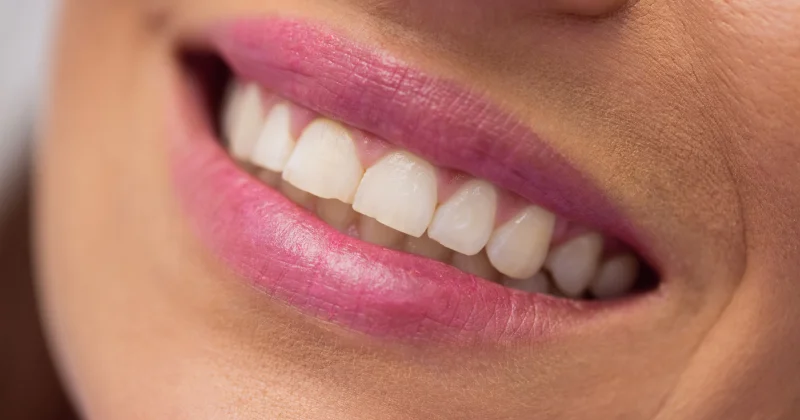
What to Do Immediately After You Chip a Tooth
If you have just chipped a tooth, a few simple steps protect it until you can be seen. Rinse your mouth gently with warm water to clean the area, and if there is bleeding, apply light pressure with clean gauze for a few minutes.
Save any fragment of the tooth in a little milk or saliva, as a dentist can sometimes reattach it. A cold compress on the cheek eases swelling, and over-the-counter pain relief helps with discomfort. Cover a sharp edge with dental wax or sugar-free gum to stop it cutting your tongue, and avoid chewing on that side.
Most importantly, call a dental clinic the same day to book an assessment. These measures are first aid, not a fix — the tooth still needs professional attention to stop the damage progressing.
Reason 1: A Chipped Tooth Rarely Stays Small
The first and most important reason is momentum. A chip changes how force travels through the tooth every time you bite, concentrating stress on a weakened edge.
That stress tends to turn a small chip into a larger one, and a larger chip into a crack that can run toward the root. What could have been a ten-minute bonding appointment can become a crown — or, if a crack reaches the nerve, a root canal. Treating it early is the single most reliable way to keep the repair small.
Reason 2: To Stop Pain and Sensitivity
A chip often exposes dentine, the softer layer beneath your enamel that connects to the nerve. That is why a chip can suddenly turn cold drinks, hot coffee, and even a deep breath of cool air into a sharp jolt.
Sensitivity is not just uncomfortable; it is a signal that the tooth’s protective barrier is breached. Repairing the chip seals that exposed surface, and most patients are surprised by how quickly the sensitivity disappears once the tooth is restored at a dental clinic.
Left untreated, that sensitivity often worsens rather than settling, because the exposed dentine wears further with everyday eating and brushing. What begins as a twinge with cold water can become a constant background ache, which is far harder to live with than a quick early repair would have been.
Reason 3: To Prevent Decay and Infection
A chip creates a rough, recessed surface that traps food and plaque in places your toothbrush struggles to reach. Over time that becomes a fast track to decay precisely where the tooth is already vulnerable.
If decay or bacteria reach the inner pulp, a simple chip can escalate into an infection or abscess that needs urgent care. Closing the chip removes that hiding place for bacteria and protects the healthy tooth structure that remains — a small fix that prevents a much bigger one.
Reason 4: To Protect Your Bite and Your Other Teeth
Your teeth work as a team, and a chip quietly throws that balance off. When one tooth loses height or shape, the opposing teeth and neighbours start to take uneven force.
Left alone, this can lead to accelerated wear, jaw discomfort, and even more chips elsewhere as your bite compensates. Restoring the tooth to its correct shape keeps the whole bite working evenly, which protects the teeth you have not damaged yet.
Reason 5: To Restore Your Smile and Confidence
Not every reason is clinical. A visible chip — especially on a front tooth — has an outsized effect on how self-conscious people feel when they talk, laugh, or pose for a photo.
Modern repairs are remarkably natural. A skilled dentist can colour-match bonding or a veneer so closely that the restored tooth is indistinguishable from the others, giving you back a smile you do not have to think about. For many patients, that confidence alone is worth the visit.
There is a quiet, everyday cost to leaving it, too. People with a visible chip often develop habits to hide it — a closed-lip smile, a hand over the mouth, avoiding photos — and those small avoidances add up. Restoring the tooth removes that self-consciousness in a single appointment, which is one of the most rewarding parts of the treatment for both patient and dentist.
Reason 6: Because Early Repair Is Faster and More Affordable
Cost is where waiting hurts most. A minor chip is often fixed with composite bonding in a single short appointment, at the lowest end of the price range.
Delay it, and the same tooth may eventually need a veneer, a crown, or root canal treatment — each of which costs significantly more and takes more chair time. In other words, the value of fixing the tooth early is not only clinical; it is financial. The cheapest version of this repair is almost always the one you do soonest.
How a Chipped Tooth Is Repaired
The right repair depends on how much of the tooth is affected and where it sits in your mouth. A good dentist matches the treatment to the damage rather than defaulting to the most expensive option.
For minor chips, composite bonding builds the tooth back up with a tooth-coloured resin in one visit. For larger or more visible damage, a porcelain veneer covers the front surface for a durable, natural finish. When a chip is extensive or the tooth is structurally weak, a crown caps and protects the entire tooth. A consultation at a dental clinic in Dubai is the only reliable way to know which you need.
Comparison Table: Chipped Tooth Repair Options
Comparing typical repair routes for a chipped tooth in the Dubai market, 2026.
|
Factor |
Composite Bonding (Minor Chip) |
Veneer / Crown (Larger Damage) |
|
Best for |
Small chips and minor edge damage |
Larger chips, front-tooth aesthetics, weakened teeth |
|
Typical cost (Dubai) |
AED 400 – 1,200 per tooth — lowest cost |
AED 1,500 – 4,500+ per tooth — higher cost |
|
Visits required |
Usually one short appointment |
Often two visits (prep + fit) |
|
Tooth structure removed |
Minimal — very conservative |
More — especially for crowns |
|
Durability |
Good; may need refreshing over time |
Excellent; long-lasting with care |
|
Aesthetics |
Natural, colour-matched |
Highly natural, very stable shade |
|
Risk of waiting |
Chip can grow, pushing you into this column |
Further delay can lead to root canal or extraction |
|
Long-term value |
Best value when the chip is caught early |
Higher cost, but necessary once damage advances |
Note: Cost estimates are indicative ranges for the Dubai market as of 2026. Individual treatment plans vary. Book an assessment at a qualified dental clinic for an accurate quote.
Why Choose Sonrisa Dental Clinic in JVC
Where you have a chipped tooth treated matters as much as how quickly. The best outcomes come from an experienced team, modern materials, and a clinic that is genuinely convenient to revisit.
Sonrisa Dental Clinic is a top rated dental clinic in JVC — Jumeirah Village Circle — one of Dubai’s fastest-growing residential communities. For residents, a trusted dental clinic in JVC means a chipped tooth can be assessed quickly, often before a small problem has time to become a big one.
As an established dental clinic in Dubai, the team at Sonrisa Dental Clinic focuses on conservative, natural-looking repairs — fixing your chipped tooth with the least intervention necessary and matching the result seamlessly to your smile. If you are weighing up cosmetic options more broadly, our companion guide on professional whitening in Dubai explains how a repair fits alongside a brighter overall smile.
When Should You See a Dentist About a Chipped Tooth?
The honest answer is sooner than most people think. Even a chip that does not hurt deserves a check, because pain is a late signal rather than an early one — the tooth can be quietly weakening long before you feel anything.
Book a same-week appointment if the tooth is sensitive, has a sharp edge cutting your tongue or cheek, or sits at the front of your smile. Treat it as urgent if there is throbbing pain, swelling, or a visible crack. A short visit to a dental clinic now is almost always cheaper, faster, and less stressful than the alternative later.
Frequently Asked Questions About a Chipped Tooth
Is a small chipped tooth an emergency?
Not usually, but it is still time-sensitive. A small chip without pain can wait a few days for an appointment, yet it should not be ignored indefinitely, because the edge tends to deteriorate. Throbbing pain, swelling, or a visible crack, on the other hand, should be treated as urgent.
Can a chipped tooth heal on its own?
No. Unlike bone, tooth enamel cannot regenerate, so the tooth will not repair itself. The chip stays until a dentist restores it, and in the meantime the exposed surface remains vulnerable to wear, decay, and sensitivity.
Does fixing a chipped tooth hurt?
For most minor chips, composite bonding is painless and needs little or no anaesthetic. Larger repairs such as crowns may require numbing, but the procedure itself is comfortable, and patients are usually surprised how straightforward the repair turns out to be.
How much does it cost to fix a chipped tooth in Dubai?
It depends on the repair. Minor bonding typically falls between AED 400 and AED 1,200 per tooth, while veneers or crowns for larger damage range higher. The earlier you treat it, the more likely you stay at the lower, simpler end of that range.
Sources & References
1. Chipped & Cracked Teeth — Clinical Guidance
Claim supported: A chipped or cracked tooth can worsen over time and may expose inner tooth layers, leading to sensitivity, decay, or infection if untreated.
American Dental Association — Cracked Tooth & Chipped Tooth (Patient Information)
2. Repair Options & Longevity
Claim supported: Composite bonding offers a conservative, single-visit repair for minor chips, while veneers and crowns address larger damage.
American Dental Association — Dental Bonding, Veneers and Crowns overview
3. Dubai Regulation
Claim supported: Dentists and dental clinics in Dubai are licensed and regulated by the Dubai Health Authority.
Dubai Health Authority — Health Regulation & Professional Licensing
Price ranges in this article are indicative estimates for the Dubai market and should be confirmed against Sonrisa Dental Clinic’s current pricing.

Sonrisa Dental Team
The clinical team at Sonrisa Dental Clinic, JVC Dubai.


Comments
adamgordon
Thanks for sharing this post, it’s really helpful for me.
cmsmasters
Glad to be of service.
annabrown
This is awesome!!
cmsmasters
Thanks.